
Oral hygiene
A good oral hygiene routine keeps your teeth and gums healthy. By brushing daily and cleaning between your teeth, you can prevent dental problems. Regular cleanings by the dental hygienist help keep your teeth clean and healthy.
Regular cleaning
Good oral hygiene is essential for maintaining healthy teeth and gums. Even with proper brushing, plaque (bacteria) can remain behind and harden into tartar. This can lead to red, swollen gums and bleeding while brushing.
That is why it is important not only to have regular professional cleanings, but also to clean between your teeth daily, for example with interdental brushes or dental sticks. This helps remove bacteria from areas that a toothbrush cannot easily reach.
During a dental cleaning, the dental hygienist thoroughly removes tartar, plaque, and stains, including from hard-to-reach areas. You will also receive personal advice on how to improve your oral hygiene at home.
With a combination of good daily care and professional cleaning, your gums remain healthy and larger dental problems can often be prevented in the future.

Advanced Gum Disease / Periodontitis
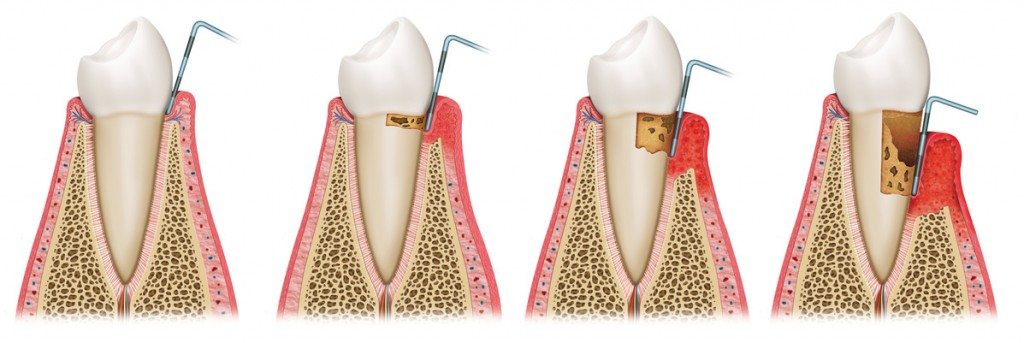
Healthy gums are the foundation of strong and stable teeth. When gum inflammation is not treated in time, it can spread to the underlying jawbone. This condition is known as periodontitis.
With periodontitis, the jawbone gradually breaks down, causing teeth to become less stable and eventually loosen. Because this process often develops gradually and without pain, it may go unnoticed for a long time.
To properly assess the health of your gums, we first carry out a comprehensive examination. During this examination, we measure the spaces around the teeth and identify inflammation and any bone loss.
The treatment is performed by the dental hygienist and consists of an intensive cleaning beneath the gums, also known as deep cleaning. During this procedure, bacteria and tartar are removed from areas you cannot clean yourself. The treatment is often performed under local anesthesia to make it as comfortable as possible.
With the right treatment and proper aftercare, the progression of the disease can be stopped and further damage to the teeth can be prevented.
Frequent asked questions
Wat kan ik verwachten bij de mondhygienist?
Bij de mondhygiënist wordt uw gebit zorgvuldig gecontroleerd en gereinigd. Tandplak en tandsteen worden verwijderd en u krijgt persoonlijk advies om uw tanden en tandvlees gezond te houden. We nemen rustig de tijd en zorgen ervoor dat u zich op uw gemak voelt!
Hoe vaak moet ik naar de mondhygiënist?
We adviseren om 2 keer per jaar een bezoek te brengen aan de mondhygiënist. Zo houden we uw tanden en tandvlees gezond en kunnen we problemen tijdig voorkomen. Afhankelijk van uw mondgezondheid kan vaker nodig zijn.
Ik ben bang voor de behandeling. Kan ik dit aangeven?
Natuurlijk! We begrijpen dat een bezoek spannend kan zijn. We nemen rustig de tijd, luisteren naar uw wensen en leggen iedere stap duidelijk uit.
Wordt een behandeling bij de mondhygiënist vergoed?
Dit hangt af van uw leeftijd en zorgverzekering. Controleer uw polisvoorwaarden om te zien welke vergoeding for u geldt.
Is een bezoek aan de mondhygiënist nodig als ik geen klachten heb?
Ja! Juist door regelmatig langs te komen, helpen we problemen aan uw tanden en tandvlees voorkomen.
Is het normaal dat mijn tandvlees bloedt?
Gezond tandvlees bloedt niet. Bloedend tandvlees kan wijzen op een ontsteking. De mondhygiënist helpt u graag dit te verhelpen.
Does treatment by a dental hygienist always hurt?
No, treatments are usually well tolerated. If you have sensitive teeth or gums, we take this into account and work as comfortably as possible.
Kan ik bij jullie terecht voor gevoelige tanden?
Zeker! We kijken samen waar de gevoeligheid vandaan komt en geven u advies om deze te verminderen.
Book an appointment!
Schrijf in via het inschrijfformulier of mail naar info@tandartsenpraktijknieuwegein.nl